

SPEARHEAD
FINAL EVENT
“A blueprint for what others can do”
SPEARHEAD, a public-private consortium working to combat antimicrobial resistance (AMR) in Switzerland, wrapped up activities at a conference in November 2025, with its partners saying the four-year initiative can serve as a “blueprint” for future groups tackling one of the 21st century’s biggest health challenges.


Gathering a final time at SPEARHEAD and beyond: Sustaining the fight against antimicrobial resistance at the Swiss Re Centre for Global Dialogue near Zurich, consortium members presented their projects, including a new antibiotics monitoring tool at University Hospital Basel and a rapid test designed by Swiss scientists to accelerate appropriate treatment.
The conference also featured national and global AMR experts from government, non-profit antibiotic development organisations and universities working to counter rising drug-resistant infections, which some experts have forecast could kill up to 10 million people annually by 2050.
For Julia Bielicki, a University Children’s Hospital Basel professor of paediatric pharmacology, the consortium’s strength lay in its “bottom-up approach” driven by clinical need – things like faster, more accurate diagnoses and effective surveillance. With the complexity of aligning many interests behind effective strategies, a mix of pragmatism and courage is necessary for AMR initiatives to succeed.
“Calculated risk-taking is what we should all be aspiring to. You need to be a little bit courageous and try different things,” Bielicki told conference attendees, summarising SPEARHEAD’s work. “There was a phase where there was quite a lot of perplexity around challenges – regulatory, legal, certification, data access. But I think we managed to develop some local solutions that can serve as a blueprint for what others can do.”
Confronting a growing challenge
AMR occurs when microbes develop resistance to therapeutics, transforming commonplace infections into a potentially deadly threat. Overuse and misuse of antimicrobials since their use starting in the 1940s has helped drive AMR prevalence, with new antibiotics innovation now struggling to keep pace.

SPEARHEAD, short for “Swiss PandEmic & AMR – Health Economy Awareness Detect“, was launched in December 2021, as the country saw an opportunity during the COVID-19 pandemic to capitalise on disease-fighting momentum to develop new strategies and tools in Switzerland, where officials see AMR as a threat not only to global health, but to overall security and sustainability.
AMR remains a silent pandemic,” Barbara Schedler Fischer, who heads the International Affairs Division at the Swiss Federal Office of Public Health, told conference attendees. “Confronting it requires both political determination and innovation.” SPEARHEAD, a Flagship project of Innosuisse, the Swiss innovation agency, sought to transform that sentiment into tangible form.
Inside Switzerland’s flagship fight
For instance, the University Hospital Basel developed a real-time hospital antibiotic monitoring system, called DrugAlert. The device, developed in-house, has enabled UHB to efficiently filter patients receiving antibiotic therapy, and to intervene quickly to initiate improvements.
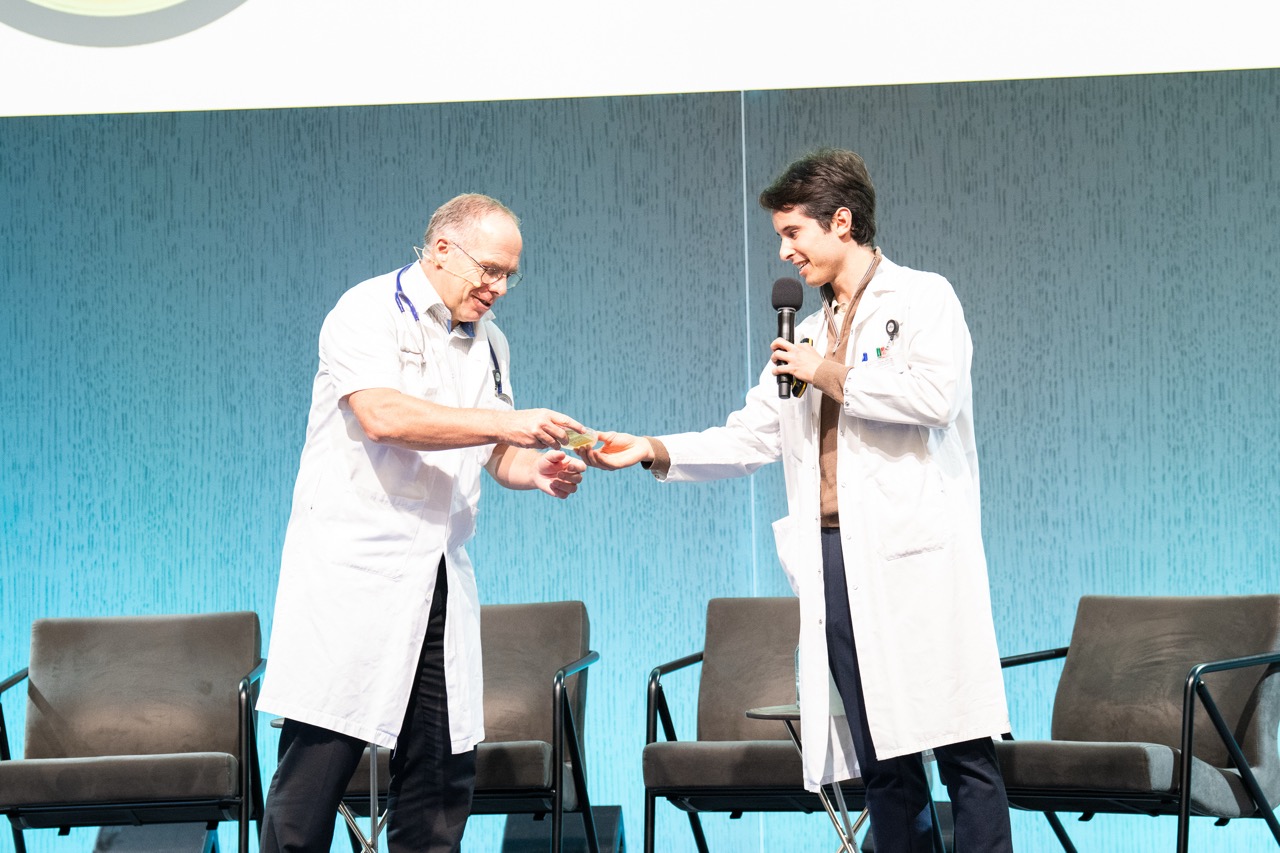
“We see it, comprehensively, for the whole hospital, at the moment the antibiotic is prescribed,” said Dr. Christoph Meier, a professor and chief pharmacist at the University Hospital Basel, added his hospital is exploring opportunities to expand the device to other drugs and specialties.
SPEARHEAD brought industry, healthcare professionals and academia together. In developing a new diagnostic test, Lausanne University Hospital scientists including Dr. Gilbert Greub and his graduate student Alexandre Delfino, worked with SPEARHEAD implementation partner Resistell, a Swiss testing startup, to cut the time it takes to determine the susceptibility of bacteria to antibiotics and thus, to reduce the time to appropriate therapies for people with urinary tract infections (UTIs).
The result: an algorithm capable of quickly differentiating between susceptible and resistant samples of bacteria. “The results are quite promising,” Delfino said. “We’re actually processing samples at 37 degrees, body temperature, and this allows us to go down to 2 hours.”
To understand the healthcare implications and potential cost savings of advances like hospital antibiotics monitoring or new diagnostics, SPEARHEAD collaborators from the University of Basel’s European Center of Pharmaceutical Medicine (ECPM) ran analyses based on health economic impact simulations, to produce data that could help decision-makers considering approving or deploying new tools.
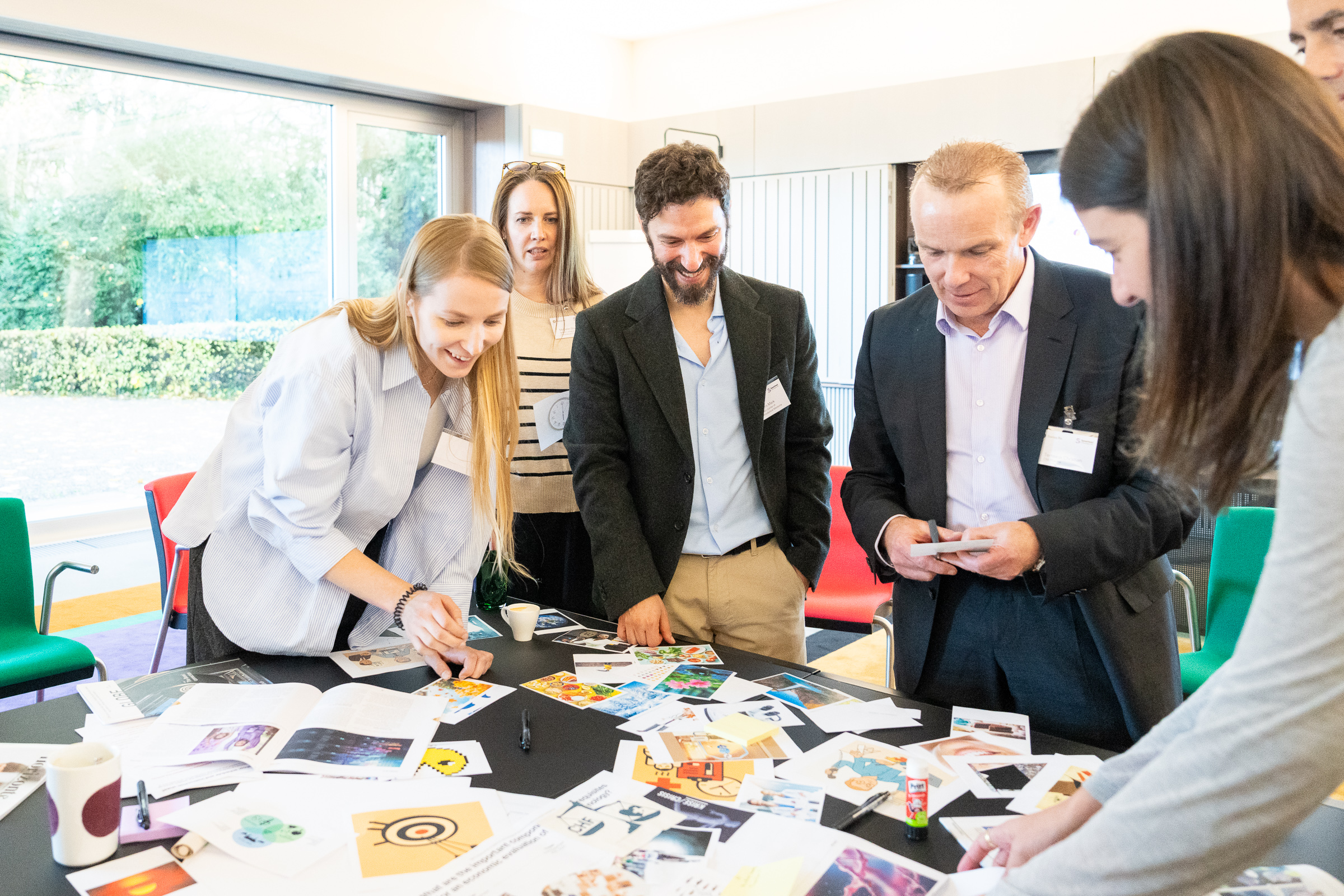
“The key message here is that such cost-effectiveness analyses and health technology assessments do not actually take the decision about whether innovations should be funded or not,” said Mark Lambiris, an ECPM scientist who led this SPEARHEAD project. “But they give a structured way of providing evidence to start discussions.”
As part of the consortium’s civic engagement-building activities, participants from the Institute of Design (IDe) of the University of Applied Sciences and Arts of Southern Switzerland (SUPSI) developed hands-on programmes to transform the complex topic of AMR into something more tangible for the broader public. At the conference, Serena Cangiano, a SUPSI instructor, said hundreds of participants took part in more than 20 workshops from 2022 to 2025 aiming to deepen understanding of AMR across society, including highlighting challenges for women who are disproportionately affected by UTIs.
Addressing the data challenge
Finally, SPEARHEAD partners from the Dalle Molle Institute for Artificial Intelligence and University Children’s Hospital Basel used machine learning to build a model to predict antibiotic resistance in UTIs before lab results arrive, using patient data like gender and infection history. While the model proved technically feasible, Dr. Lina Aerts, a University Children’s Hospital Basel researcher, said it quickly became clear its development “wasn’t just a technical journey.”

“It was a complex navigation through ethics, law and people,” Aerts said, describing obstacles to accessing data. “Responsible innovation requires more than strong algorithms.”
Saara Malkamäki, a manager at the Innovation Office of the University of Basel who coordinated SPEARHEAD activities, also emphasised the need to strengthen data access, a particular challenge in Switzerland where healthcare providers in different regions often work independently with fragmented systems.
“We do need to make data findable, accessible, interoperable and reusable,” she said. “This is something I want us in Switzerland to make happen, because data is the power of innovation.”
Learning from global experts
The SPEARHEAD conference’s speakers also included Gail Hayward, Professor of primary care at the University of Oxford, who described efforts to help improve stewardship among general practitioners who write 80% of UK antibiotics prescriptions, and Peter Beyer, deputy executive director of the Global Antibiotic Research and Development Partnership (GARDP), a non-profit co-founded by the WHO a decade ago to help reinvigorate antibiotics development.

Better international coordination, Hayward told attendees, is needed to promote best practices and prevent duplication, including diagnostics. “We need better evidence, and ideally, we shouldn’t be doing this on our own,” she said. “We should have efficient platform studies that can run across the EU, across the world, that evaluate these diagnostics really well once, and then everyone can use that data.”
In his keynote speech, Beyer outlined GARDP’s activities, including successes and setbacks, and said antibiotics innovation should focus on priority pathogens, prioritising quality over quantity.
“We don’t need so many new antibiotics. We need some new antibiotics over the period of the coming years, and they need to be the right antibiotics,” Beyer said. “It is crucial to (ask), ‘What are the antibiotics we actually need that from a public health perspective are going to make the difference?’ That’s what we are doing.”
As SPEARHEAD concludes, its partners will continue following how the tools and partnerships created here evolve in hospitals, labs and communities. The real test of success lies in turning shared innovations into concrete improvements, including better antibiotics stewardship, improved diagnoses, and meaningful progress in enlisting all stakeholders in a fight that will occupy us for decades to come.
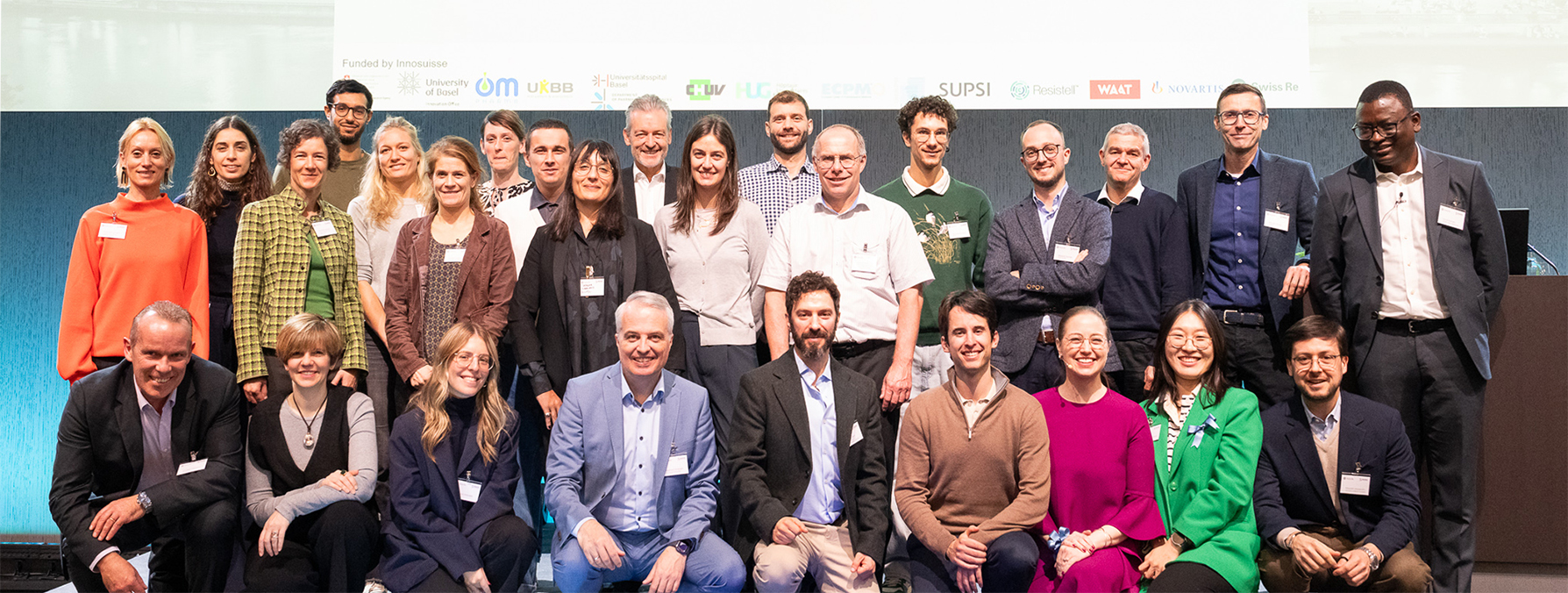
SPEARHEAD would like to thank all of its research, implementation, and support partners who made this journey possible: University of Basel, University Children’s Hospital Basel (UKBB), University Hospital of Geneva (HUG), University Hospital of Vaud (CHUV), Dalle Molle Institute for Artificial Intelligence, University of Applied Sciences and Arts of Southern Switzerland (SUPSI), Novartis, Swiss Re Group, Resistell AG, WAAT Switzerland GmbH, OM Pharma, SWICA, Global Antibiotic Research and Development Partnership (GARDP), and NCCR AntiResist.